
Search behavior research
Search widely. Select wisely.
Understand what your market actually wants and find the gaps nobody has filled. See what people are searching for across Google, YouTube, Amazon and more, with the volume, cost and competition data to back what you choose.
Choose the right model for every search
Modifier
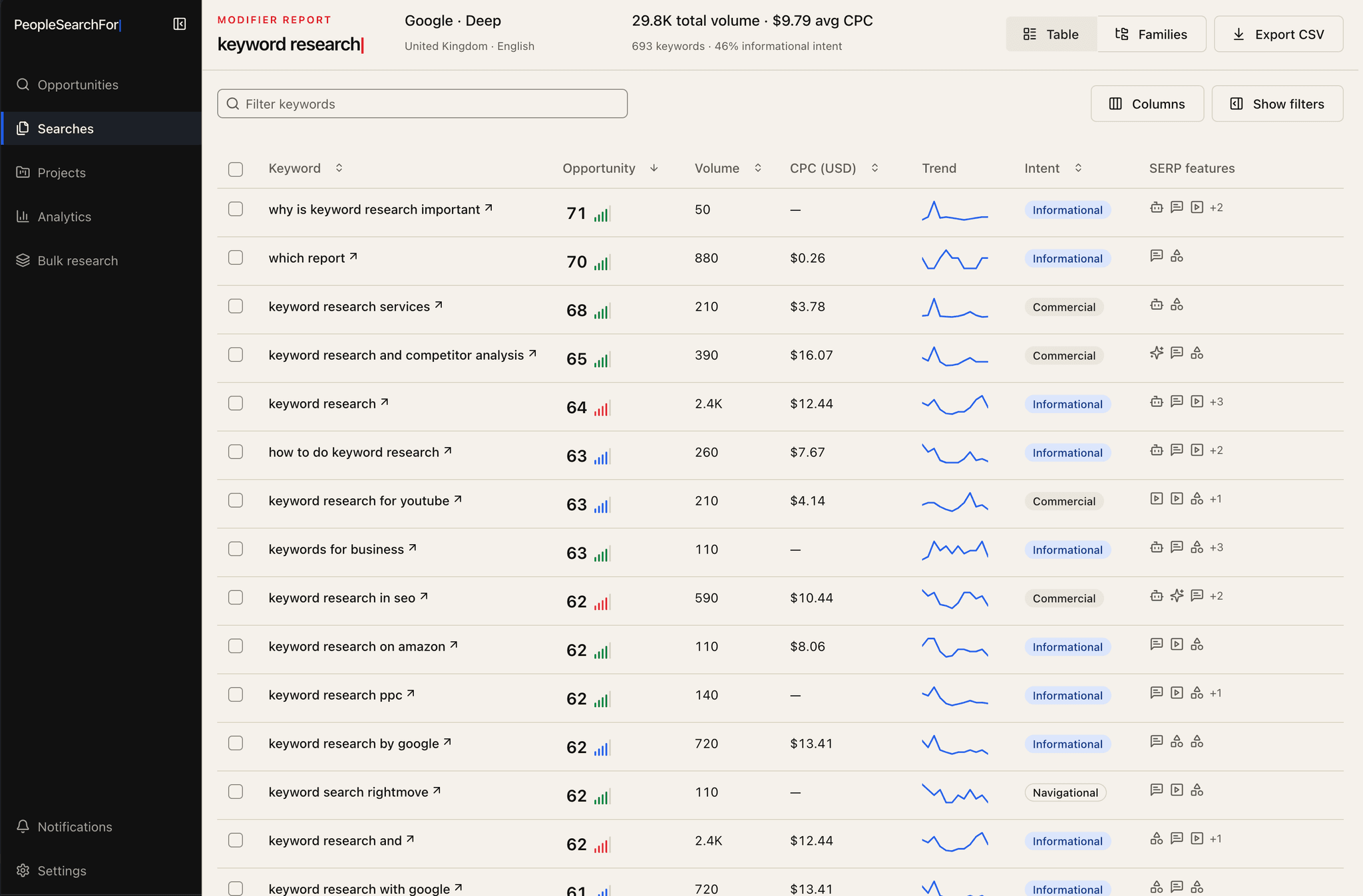
Expand a seed keyword with prefixes, suffixes and modifiers.
Related
Find the related terms and questions people search next.
Site
See what people search for on any domain.
Ads
See what competitors bid on, and what it costs.
AI Search
Track visibility across ChatGPT, Gemini, Perplexity and more.
Product
See what people actually search for
People Search for surfaces real queries, intent and opportunity — so, you can make confident, evidence-backed decisions
Workflow
From noise to opportunity
We turn scattered search signals into opportunities that can move your business.
1. Collect
Bring real search suggestions together

2. Analyze
Understanding intent, context and trends

3. Prioritize
Focus on the opportunities that matter

FAQs
A search behavior research tool. Run a term and get the real queries people use around it, with volume, cost and competition data, so you can decide what is worth acting on.
Anyone who needs to know what their market is searching for. SEO and content teams, PPC buyers, agencies working across client accounts, and product and brand teams doing audience research.
Most tools start from keywords you already know. We start from how people actually phrase things, which surfaces the audiences, comparisons and questions you would not have thought to look for.
Plan content, find gaps your competitors have missed, build PPC keyword lists, and brief work with evidence behind it. Export everything to CSV, or pull it through the API.
No. Search data is one of the least filtered sources of customer insight available, and reading it does not require any SEO background. Product, brand and content teams use it to understand what their market wants; the metrics are there when you need to prioritise.
Search behavior made legible.
The questions are already being asked. Make sure you are the one answering them.